Be yourself; Everyone else is already taken.
— Oscar Wilde.
This is the first post on my new blog. I’m just getting this new blog going, so stay tuned for more. Subscribe below to get notified when I post new updates.
lowkey-ly lurking
Be yourself; Everyone else is already taken.
— Oscar Wilde.
This is the first post on my new blog. I’m just getting this new blog going, so stay tuned for more. Subscribe below to get notified when I post new updates.
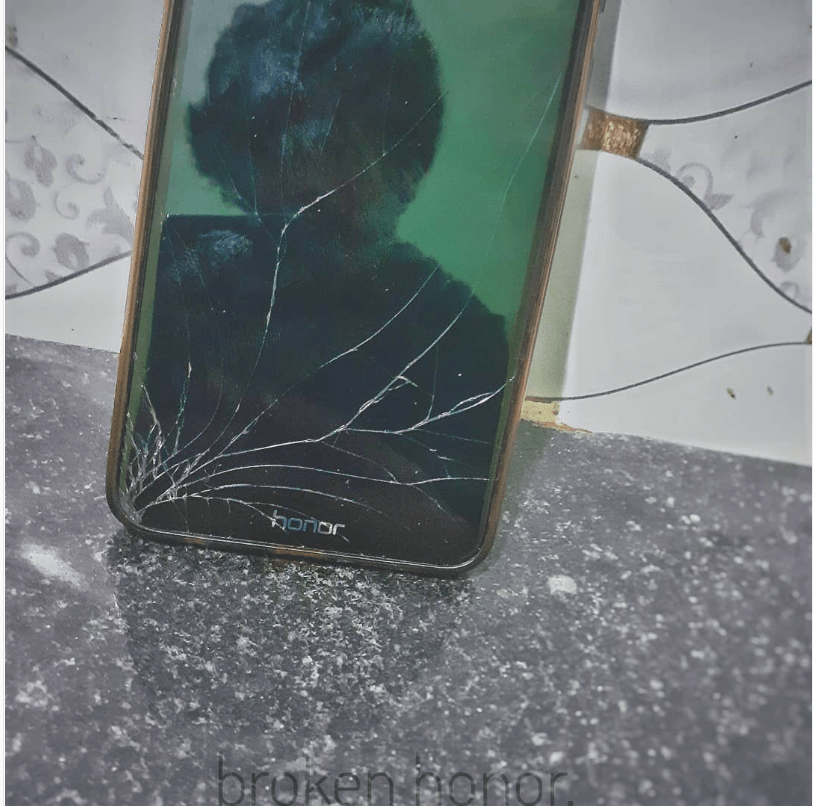
It’s been a couple days I’ve had my shiny new Samsung
But the old broken Honor
Beacons me
I cast it aside the moment it stopped working
Eager to move on
To the next best
Anything I might need must be backed up, right
It is
But everything I want isn’t
That phone saw so much change
In so little time
Both outside and inside me
Changing music tastes
Overcoming delusion
New hobbies
New friends
New cities
Mental breakdowns
Tinder shenanigans
Cutting off toxicity
Growing hair
I took ~800 screenshots in ~4 months
Things I found funny
Intriguing
Flabbergasting
Things that made me question
Snicker
Metamorphosize
But of course I didn’t back that up
Because those trivialities seemed just that then
Trivialities
But now I yearn to just scroll through the sea of story content
On that broken screen
On the crevices of which I used to scratch my cuticle
That thick ugly cover
That laggy Microsoft launcher
That time of discovery.
People tell me I get irrationally attached to objects
But to me they’re more
To me they’re a bookmark
To the past
Where I laughed at different things
Where I liked different people
Where I used to feel differently about different things
Where I used to be worse¿
The stigma surrounding mental health is not a new issue. Over the past decade or so, we have made tremendous progress in combating this stigmatization. One of the biggest and most obvious ways we have achieved this is having open conversations about the same. This is happening on a large scale in the information age, especially on social media, where victims are coming out and talking about their struggles with a multitude of disorders. These candid declarations undoubtedly make people less averse to the patients of mental health disorders. But do we need to draw a line where such narratives are pushed too far?
Somehow our efforts to “delete the stigma” surrounding mental illness has drastically changed towards a trend to “romanticize the stigma.” In fact, there are several online communities which have thrived over this romanticism. Tumblr and Whisper can be such examples; the art and memes below are images one would be likely to see on any given day when scrolling through them.


While mental illness shouldn’t be something people are scared of, it also isn’t something that people should aspire to have. It stands to reason that these images and posts might actually incite self-destructive behavior. It might be difficult to comprehend why people would trivialize such serious issues. The truth is, misery loves company, and shared sadness can sometimes be seen as a way of fitting in, especially by adolescents who are likely to feel alienated in their offline environments.
Mental health issues aren’t a fairy tale. They are palpably harrowing people’s lives. For some victims, every day is a battle and requires a choice to be made between living and dying, trying and giving up. Speaking out about mental health is incredibly difficult, yet others seem to view it as quirky and an “admirable” personality trait.
Suddenly, we have teenagers self-diagnosing and speculating whether they are victims of depression or anxiety. It’s not rare to find young people describing themselves as ‘fashionably depressed’. The problem is intensified as social media ‘influencers’ such as Corinna Koph release a merchandise line based around mental health issues.


Such a clothing line has multiple issues. On the surface, influencers are seeming to monetize the mental health states of their audiences. But a deeper problem also exists but is not as apparent – this gives people an opportunity to parade around wearing clothes that ‘show off’ their struggles with anxiety. Society has or is turning mental illness into something that is “cool,” “edgy” or even “glamorous.”
This issue is not just limited to social media platforms though. Mainstream media falls into the same trap. The Netflix original series, 13 Reasons Why can be seen as an example. The show is about a girl named Hannah, who commits suicide in an exceedingly graphic and disturbing scene. After her demise, 13 tapes are retrieved, each one containing anecdotes about one of thirteen people who coaxed Hannah to take that step, perhaps in a twisted form of revenge.

As the show mistakenly portrays, suicide is not, and never should be used as an act of vengeance against all the people that have harmed you. Additionally, the constant portrayal of Hannah on the scene even after her death is extremely problematic, because it feeds into the idea that you aren’t really gone after suicide. This idea could be extremely damaging to a certain type of audience, who might be on the fence regarding taking such a step. Ijeoma Oluo, has described the series as “the ultimate fantasy of teen suicidal ideation.” It’s possible 13 Reasons Why is contributing to new ways for teens to think about suicide – and not in a prevention-minded way.
The downright most damaging thing in this show, is when a character is asked why she indulges in self-harm, she said, “it’s what you do instead of killing yourself.” This sends a message to people with suicidal thoughts that they can just self-harm, whereas there are a million other healthy ways to deal with suicidal tendencies.
“There is a great concern that I have … that young people are going to overidentify with Hannah in the series and we actually may see more suicides as a result of this television series,” said Dan Reidenberg, the executive director for Suicide Awareness Voices of Education, a nonprofit group with the mission of suicide prevention. That is a legitimate concern, seeing how although the show’s creators claim that their goal with the series was to ‘raise awareness’, 13 Reasons Why offers very little insight into the psychology of suicide.
In conclusion, a prevailing sentiment like this certainly isn’t sustainable, especially keeping in mind our adolescent generation and frankly uncharted environment of the information age they are growing up in. By refusing to acknowledge this rampant epidemic of romanticism, perhaps we are encouraging it. All of the noise surrounding mental health is more than likely to pull attention away from the cases that are in legitimate need of help.
References
The Romanticism of Mental Illness. (n.d.). Retrieved from https://stopromanticizingthingsthathurt.weebly.com/the-romanticism-of-mental-illness.html
Sass, L. A. (2001). Romanticism, Creativity, and the Ambiguities of Psychiatric Diagnosis: Rejoinder to Kay Redfield Jamison. Creativity Research Journal, 13(1), 77-85. doi:10.1207/s15326934crj1301_9
Why We Need to Stop Romanticizing Mental Illness. (2019, November 25). Retrieved from https://themighty.com/2018/03/stop-romanticizing-mental-illness/
Have a WordPress.com account? Log in now.

